
9/10/26: "Colorado's Bats: Their Values and Challenges"
Monthly Meetings and Programs
Meeting location has changed to Baldridge Hall, Montrose United Methodist Church, 647 South 1st Street. All are welcome and there is no charge, though donations are gratefully appreciated. For additional information or to let us know that you would like to do a presentation, please contact Caroline Evans via the BCAS email.
To join via Zoom USE THIS LINK
https://us06web.zoom.us/j/8192
Meeting ID: 819 2091 0200
Passcode: 503883
Join instructions: https://us06web.zoom.us/meetin
Summer 2026 Programs
Dan Neubaum, "Colorado's Bats: Their Values and Challenges"
Date: Thursday, September 10, 2026
Time: 7:00 p.m.
Location: Baldridge Hall, Montrose United Methodist Church, 647 South 1st Street, Montrose
Dan will give a brief background of bats that occur in Colorado, explain their unique traits, their benefits to the ecosystem, and the challenges that arise when their world and ours overlap. He will describe some of the equipment used to study bats, including echolocation detectors, telemetry equipment, and mist nets. Attendees will learn about threats to bat conservation and Dan will explain the impacts of white-nose syndrome, a fungal outbreak discovered in North American bats that recently reached Colorado.
About our speaker: Dan Neubaum is a Species Conservation Program Manager with Colorado Parks and Wildlife, having worked with bats for nearly 30 years. After working on field studies throughout the western United States and Australia with bats, toads, beaver, and Tasmanian devils, he earned an M.S. in Wildlife Biology working on roosting ecology and disease transmission of bats using urban areas. Dan serves as the Chair of the Colorado Bat Working Group and is on the board of the Western Bat Working Group. In his current position, he facilitates work with bats through a number of aspects including studies of roosting ecology, disease transmission, species inventory and monitoring, education, and conservation.
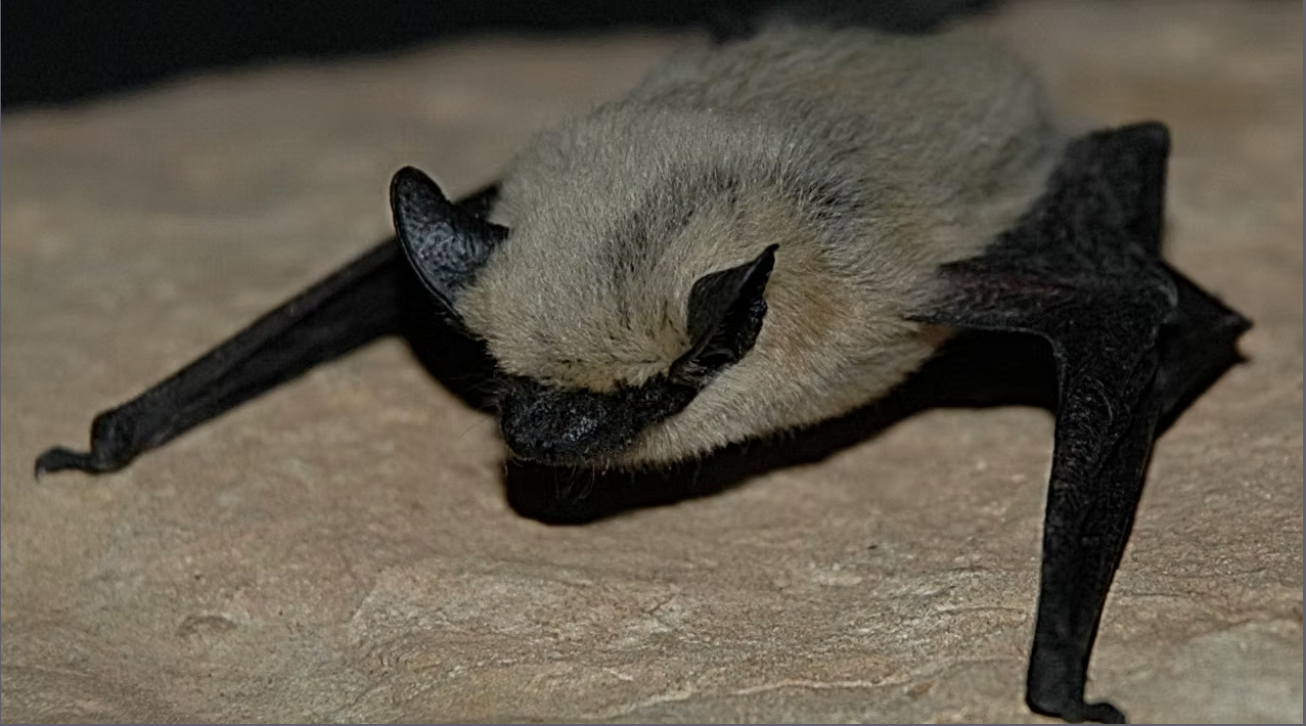
Silver-haired bat (photo courtesy of Dan Neubaum)
Fall 2026 Programs
Jon Horn and Steve Dike: “Mongolia”
Date: Thursday, November 12, 2026
Time: 7:00 p.m.
Location: Baldridge Hall, Montrose United Methodist Church, 647 South 1st Street, Montrose
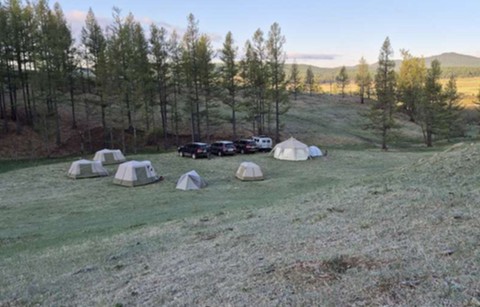
From May 31 to June 18, 2026, BCAS members Alan Reed, Susan Chandler, Steve Dike, and Jon Horn joined four other birders from Canada and our Canadian bird guide – Avery Bartels of Avocet Tours – on a birding trip to Mongolia. Mongolia is very much undeveloped for tourism, and that was much of the appeal to going there. We had a Mongolian bird guide, who spoke excellent English, and an entourage that included two other drivers and several others that set up camp nightly and prepared hot meals for breakfast, lunch, and dinner, loading and unloading our gear from small Russian vans that could go anywhere. We moved from camp to camp throughout the central part of the country visiting taiga forests, grass steppe lands, lakes and wetlands, river valleys, the Gobi Desert, rugged canyons, and mountainous terrain above timberline. At Ikh Bodg National Park in the Gobi Altai Mountains, we sought, unsuccessfully, Snow Leopards, but saw several high-altitude birds. At Hustai National Park, we saw Przewalski’s horses – the only true wild horses in the world – that have been reintroduced after near extinction. We saw over 200 species of birds and a wide variety of animals, including ibex, gazelle, argali (like our bighorn sheep), elk, deer, fox, marmots, gerbils, squirrels, pika, lizards, frogs, and toads.
About our speakers: Jon Horn grew up in northern California, where he began paying attention to birds around his house and became even more engaged because of two uncles who were interested in birds. It wasn’t until college that he finally obtained binoculars and began going out with friends to various places to bird around Portland and to the Malheur Wildlife Refuge in southeastern Oregon. Jon moved to Montrose in 1984 to work as an archaeologist and met Alan Reed and Susan Chandler. Together, they started Alpine Archaeology in late 1987. He joined the Black Canyon Audubon Society in the early 1990s. Later, he served on the board, was President for six years, and continued as the website manager for a number of years.
Steve Dike was born in Evansville, Indiana, but his father’s job transfer brought the family to Manchester, MO, a rural area at the time. He remembers binoculars were always on the dining room windowsill to watch birds in the yard and creek. He moved to Colorado in 1972, always having bird feeders wherever practical. Most of his career was spent as a quality-control inspector on large environmental cleanup projects for an international construction engineering company. He became more serious about birding while working two winters in New Orleans. After relocating to Montrose in 2011, he participated in a guided birding trip to Cerro Summit with the Black Canyon Audubon Society and joined soon after. He enjoyed outings with three of the best local birders and continued that tradition over the years.